Environmental Analysis Research
Abstract
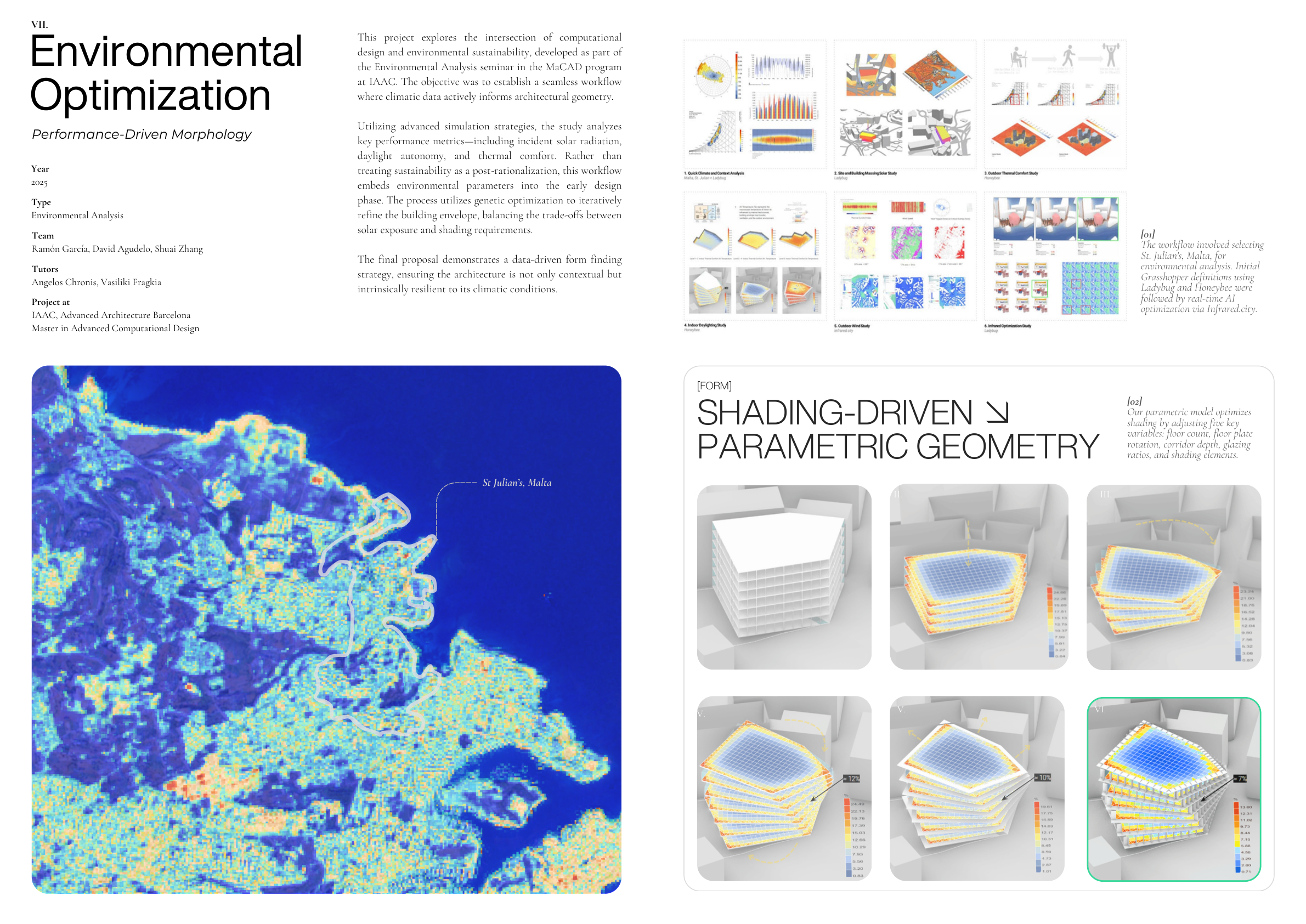
Performance-driven morphology study using genetic optimization to iteratively refine building envelopes. Analyzes incident solar radiation, daylight autonomy, and thermal comfort to embed environmental parameters into early design phases.
Context / Problem
This project explores the intersection of computational design and environmental sustainability, developed as part of the Environmental Analysis seminar in the MaCAD program at IAAC. The objective was to establish a seamless workflow where climatic data actively informs architectural geometry.
Methodology
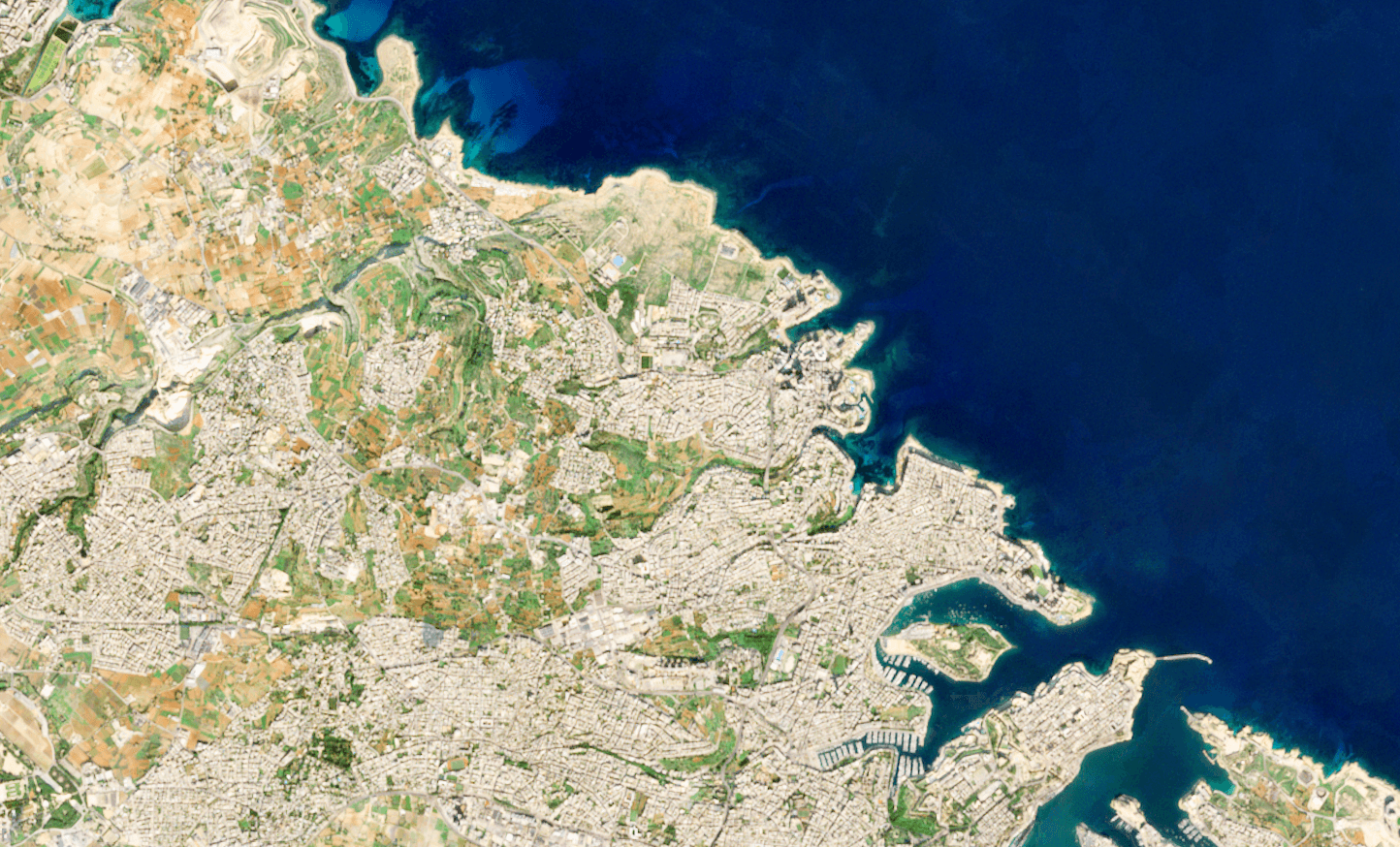
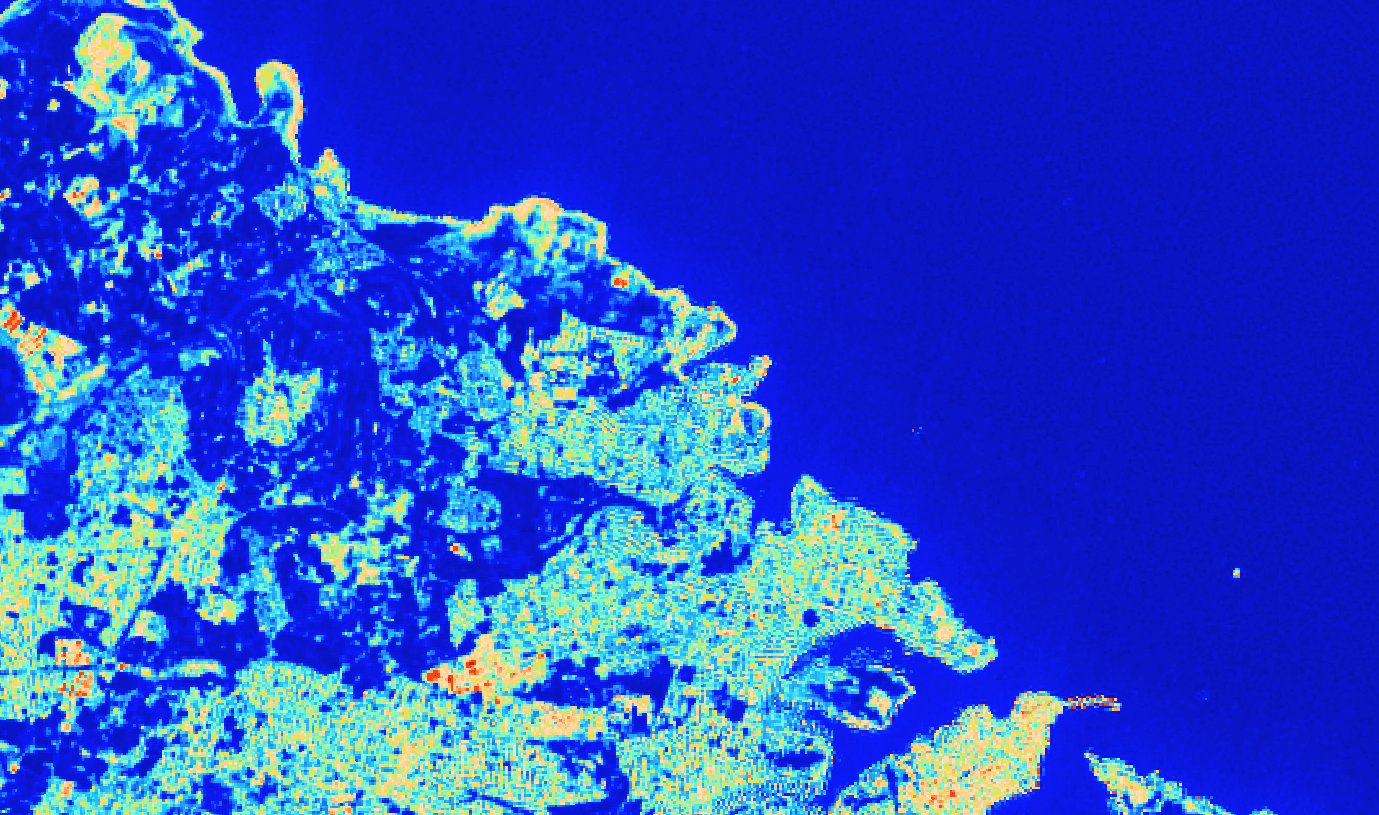
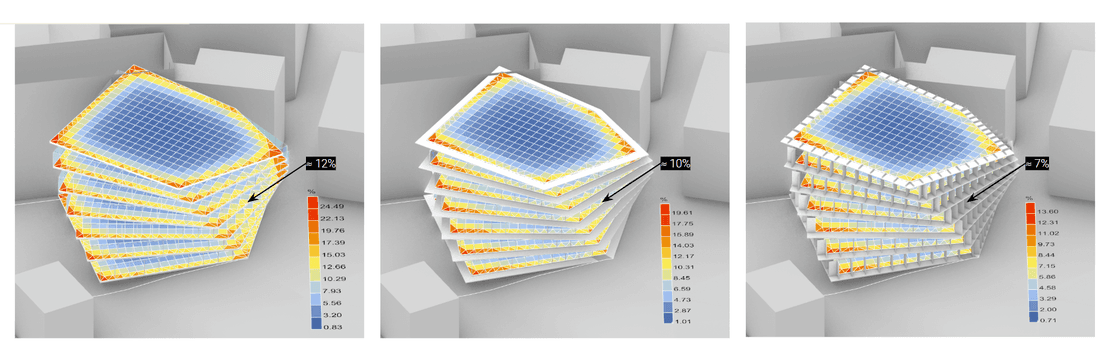
The parametric model optimizes shading by adjusting five key variables: floor count, floor plate rotation, corridor depth, glazing ratios, and shading elements. The process uses genetic optimization to iteratively refine the building envelope, balancing the trade-offs between solar exposure and shading requirements. Site: St Julian's, Malta.
Results
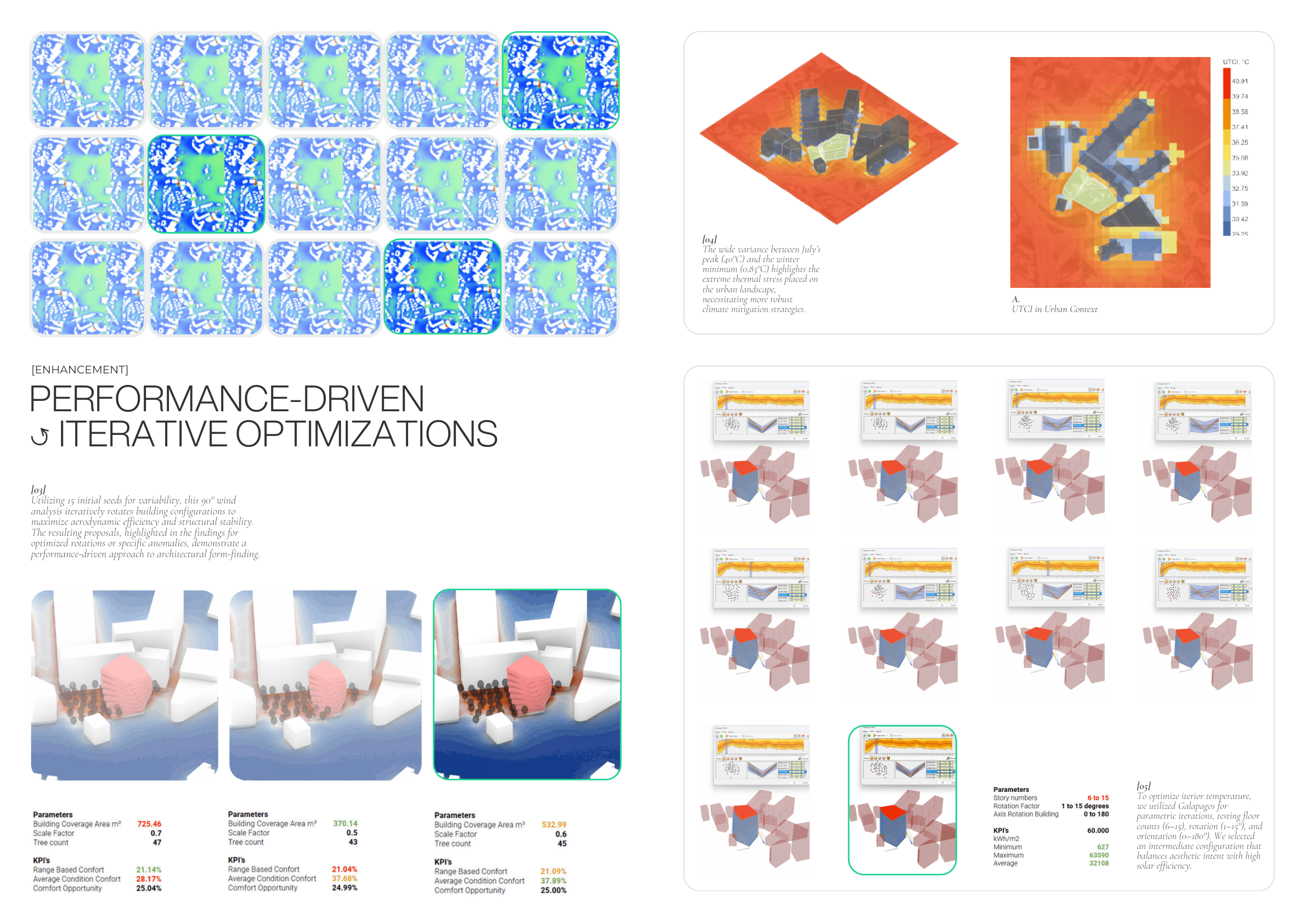
Utilizing 15 initial seeds for variability, this 90° wind analysis iteratively rotates building configurations to maximize aerodynamic efficiency and structural stability. Galapagos parametric iterations tested floor counts (6–15), rotation (1–15°), and orientation (0–180°), selecting an intermediate configuration balancing aesthetic intent with high solar efficiency.
Conclusions
The final proposal demonstrates a data-driven form-finding strategy, ensuring the architecture is not only contextual but intrinsically resilient to its climatic conditions. Rather than treating sustainability as a post-rationalization, this workflow embeds environmental parameters into the early design phase.
Project Documentation