Geomorphing Terrascapes
Abstract
Data-driven computational aggregation that reinterprets the vernacular intelligence of the Mexican barrio through algorithmic precision. Uses WFC algorithms and TSP optimization to generate a porous, mixed-use fabric adapted to Chihuahua's rugged topography.
Context / Problem
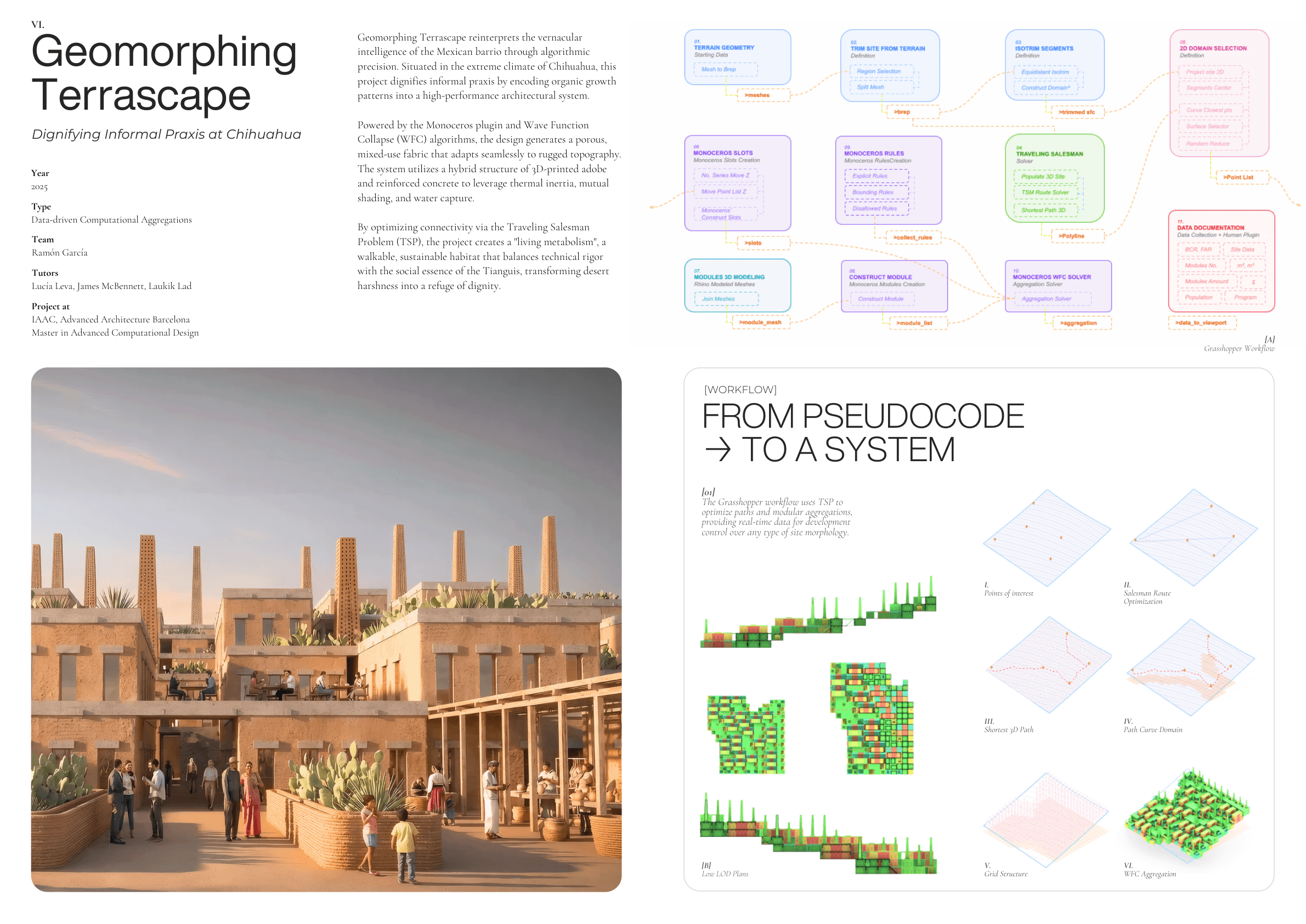
Geomorphing Terrascape reinterprets the vernacular intelligence of the Mexican barrio through algorithmic precision. Situated in the extreme climate of Chihuahua, this project dignifies informal praxis by encoding organic growth patterns into a high-performance architectural system.
Methodology
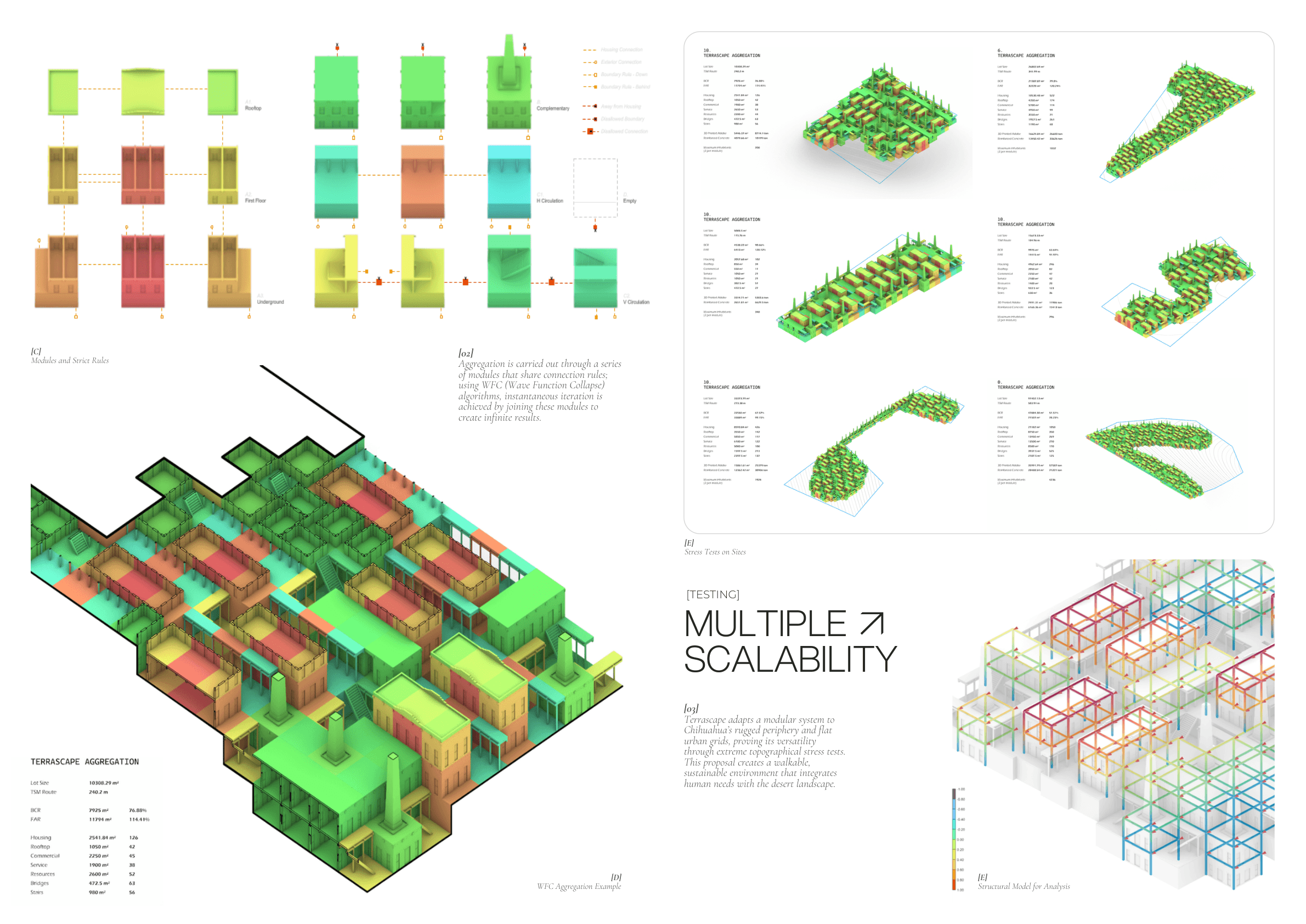
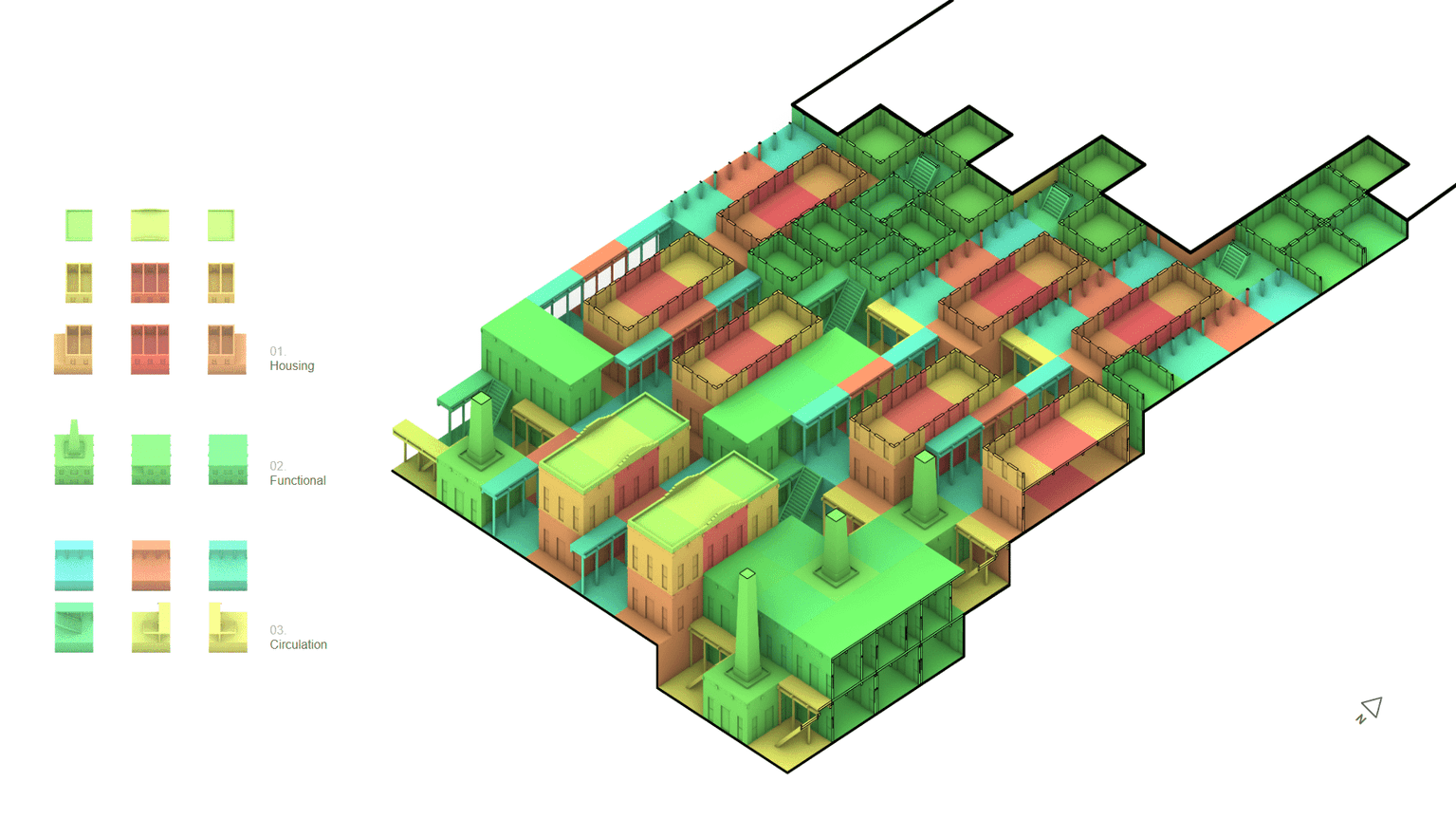
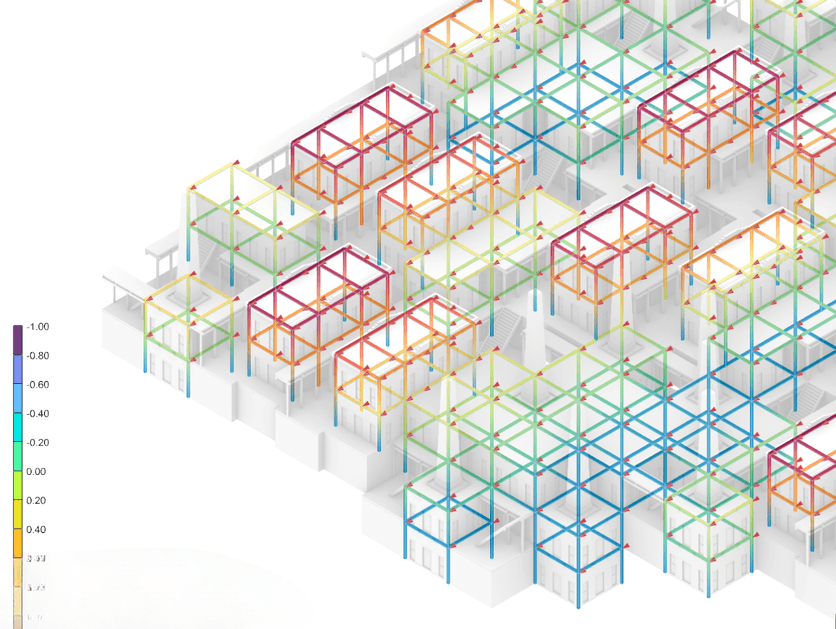
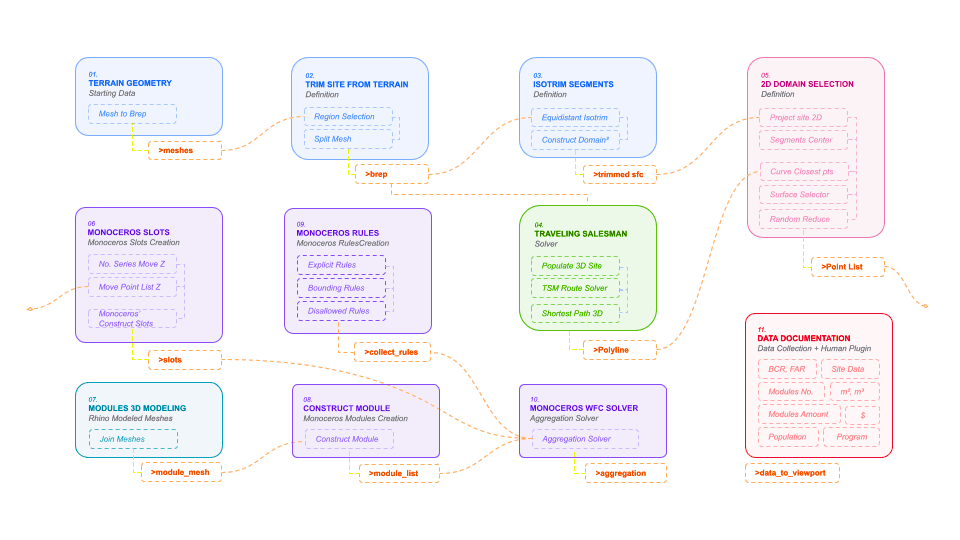
The Grasshopper workflow uses TSP to optimize paths and modular aggregations, providing real-time data for development control over any type of site morphology. Powered by the Monoceros plugin and Wave Function Collapse (WFC) algorithms, the design generates a porous, mixed-use fabric that adapts seamlessly to rugged topography. The system utilizes a hybrid structure of 3D-printed adobe and reinforced concrete.
Results
Terrascape adapts a modular system to Chihuahua's rugged periphery and flat urban grids, proving its versatility through extreme topographical stress tests. The proposal creates a walkable, sustainable environment that integrates human needs with the desert landscape.
Conclusions
By optimizing connectivity via the Traveling Salesman Problem (TSP), the project creates a 'living metabolism' — a walkable, sustainable habitat that balances technical rigor with the social essence of the Tianguis, transforming desert harshness into a refuge of dignity.
Project Documentation