Oblicuo Pavilion
Abstract
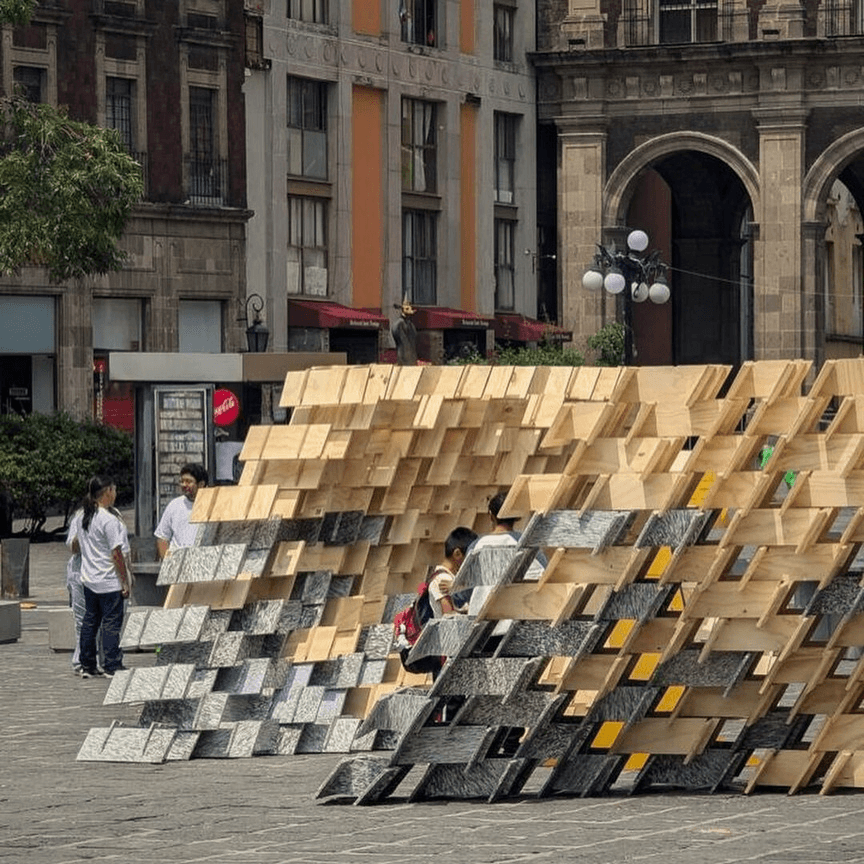
Pavilion at Mextrópoli Festival 2024 conceived as a transitional space that invites pedestrians to rediscover their surroundings through movement. Built from recycled HDPE and wood using digital fabrication, with structural displacement optimized via Galapagos.
Context / Problem
The pavilion is conceived as a transitional space that invites pedestrians to rediscover their surroundings through movement. In this public space, people interact and construct unique perceptions through a continuous process of visual reinterpretation. The pavilion acts as a decomposer of visuals, resulting in a constant readjustment of the surrounding realities.
Methodology
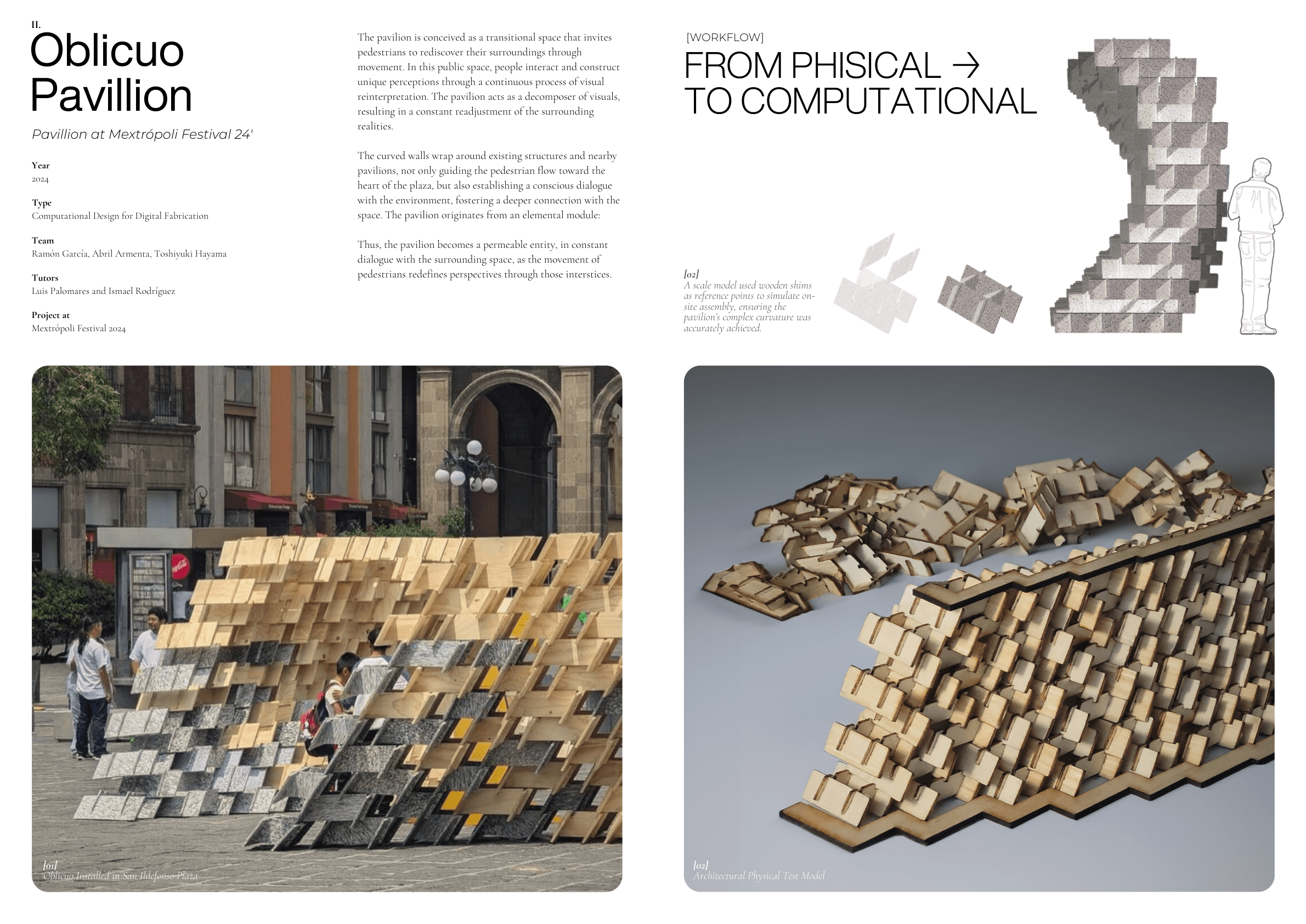
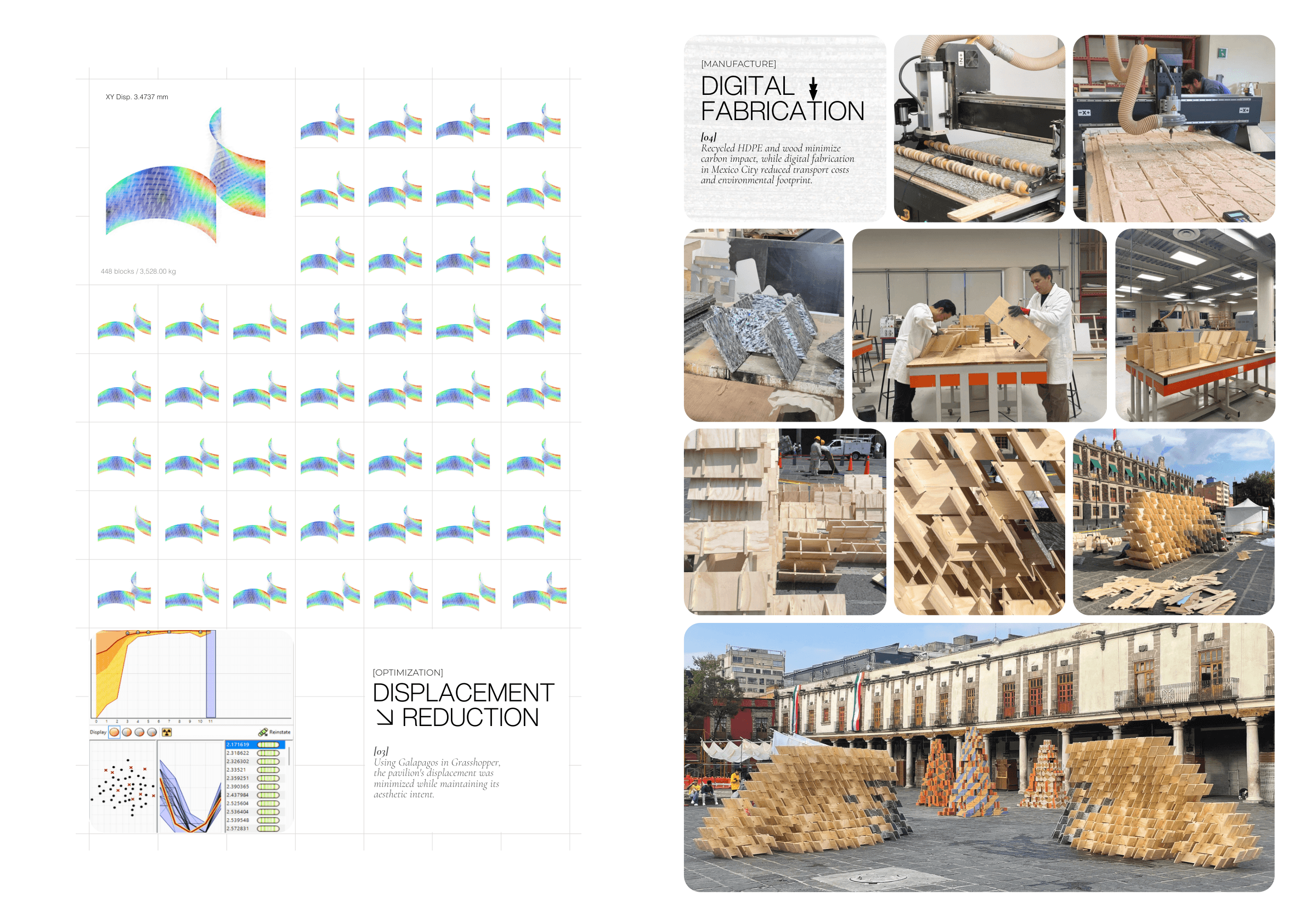
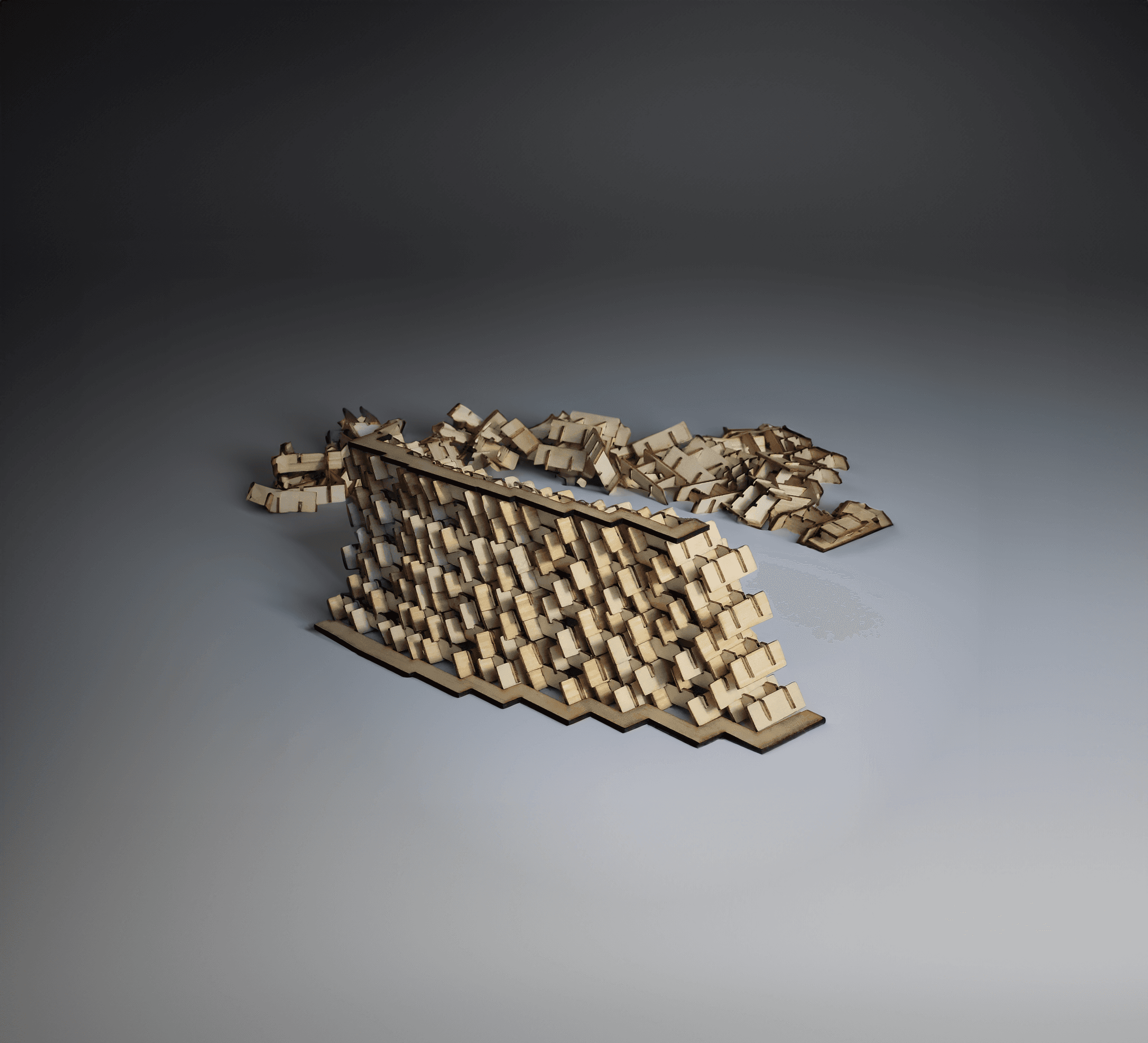
The curved walls wrap around existing structures and nearby pavilions, not only guiding the pedestrian flow toward the heart of the plaza, but also establishing a conscious dialogue with the environment. A scale model used wooden shims as reference points to simulate on-site assembly, ensuring the pavilion's complex curvature was accurately achieved. Using Galapagos in Grasshopper, the pavilion's displacement was minimized to 3.47mm while maintaining its aesthetic intent.
Results
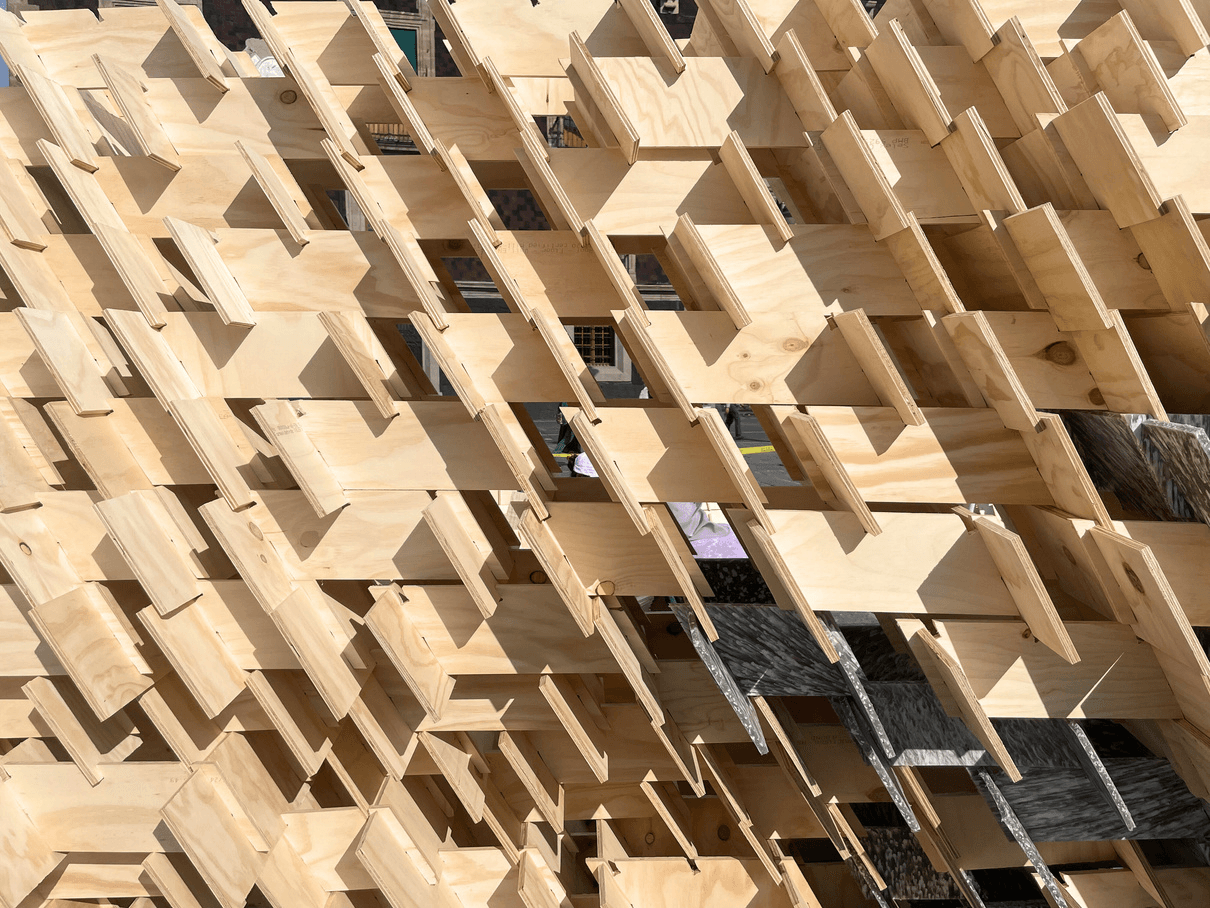
The final pavilion consists of 448 blocks weighing 3,528 kg, installed at San Ildefonso Plaza during Mextrópoli Festival 2024. Recycled HDPE and wood minimize carbon impact, while digital fabrication in Mexico City reduced transport costs and environmental footprint.
Conclusions
The pavilion becomes a permeable entity, in constant dialogue with the surrounding space, as the movement of pedestrians redefines perspectives through the interstices. The project demonstrates how computational optimization and sustainable materials can produce compelling public architecture.
Project Documentation