Industrial AI Agent, Spatial Flow
Abstract
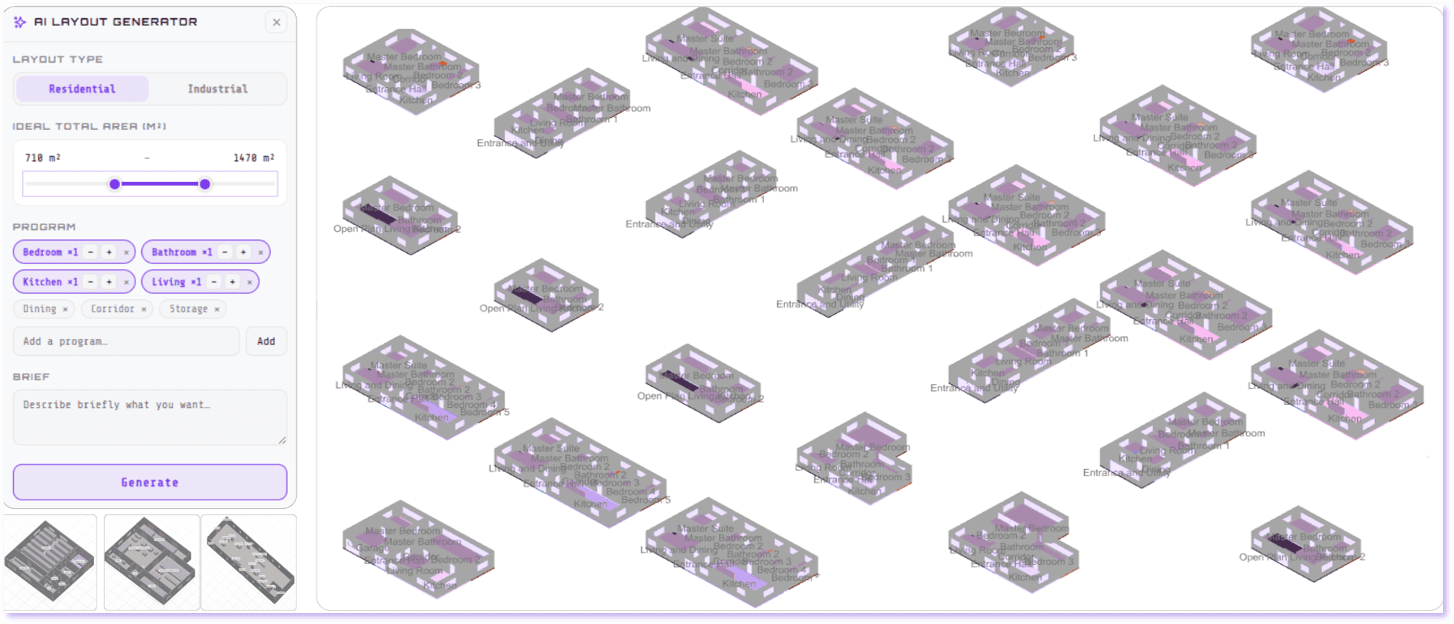
How can an AI agent reason through industrial space in real time, adjusting equipment placements, resolving spatial violations, and explaining every decision before the layout is finished?
Context / Problem
Industrial layout design relies on codified standards: clearances, corridor widths, equipment access rules. Yet the process remains manual, iterative, and validated only after the design is complete. There is no system that reasons through space while the layout is still being built.
Methodology
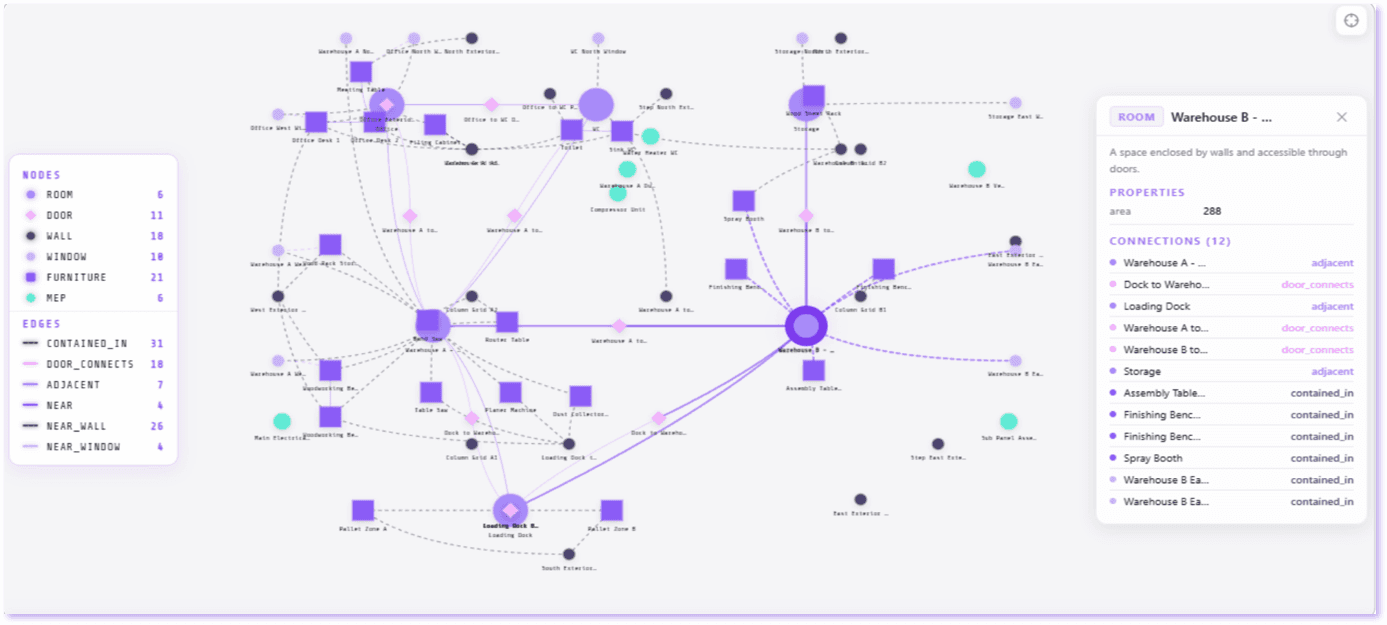
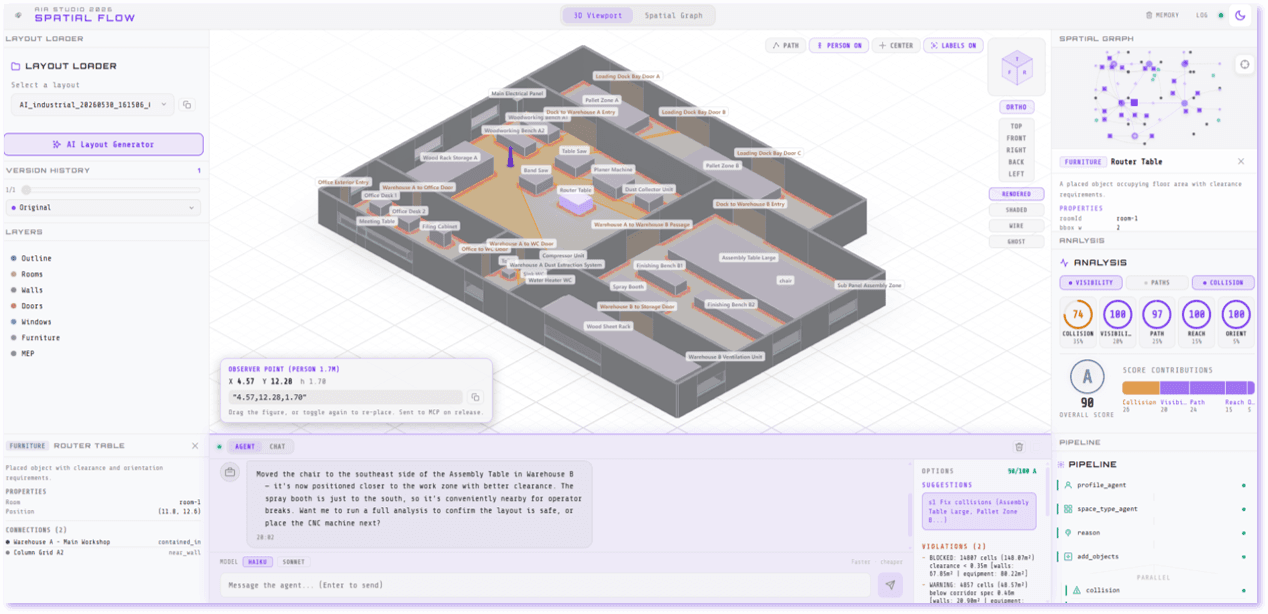
The team developed an agentic AI pipeline using LangGraph and Claude, grounded in a NetworkX spatial graph that encodes rooms, furniture, and relationships as structured knowledge. Six analytical tools (Collision, Reachability, Orientation, Path Analysis, Visibility, Scoring) run in real time, feeding results back to the LLM so it can adjust placements, resolve violations, and narrate its spatial reasoning at each step.
Results
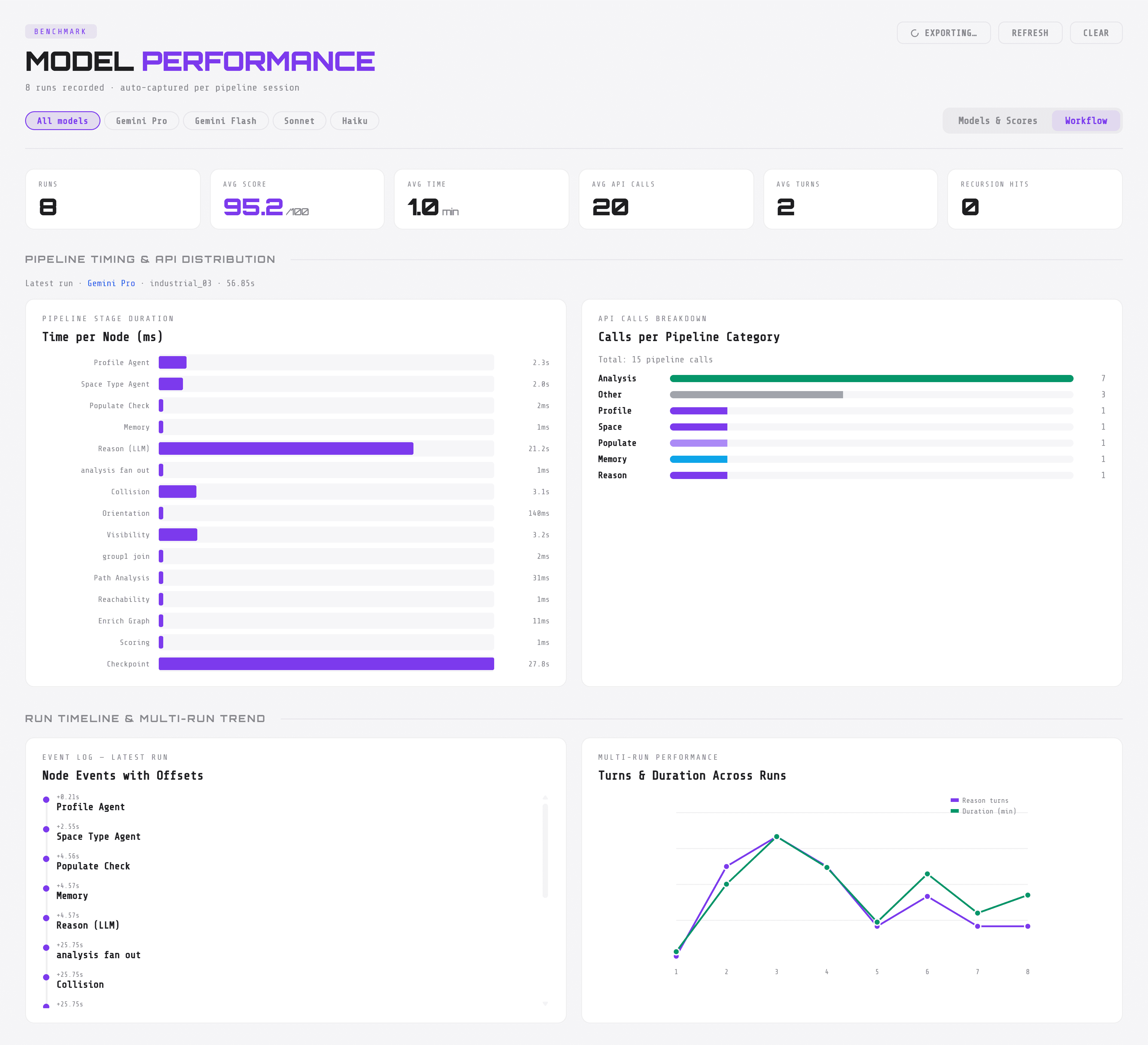
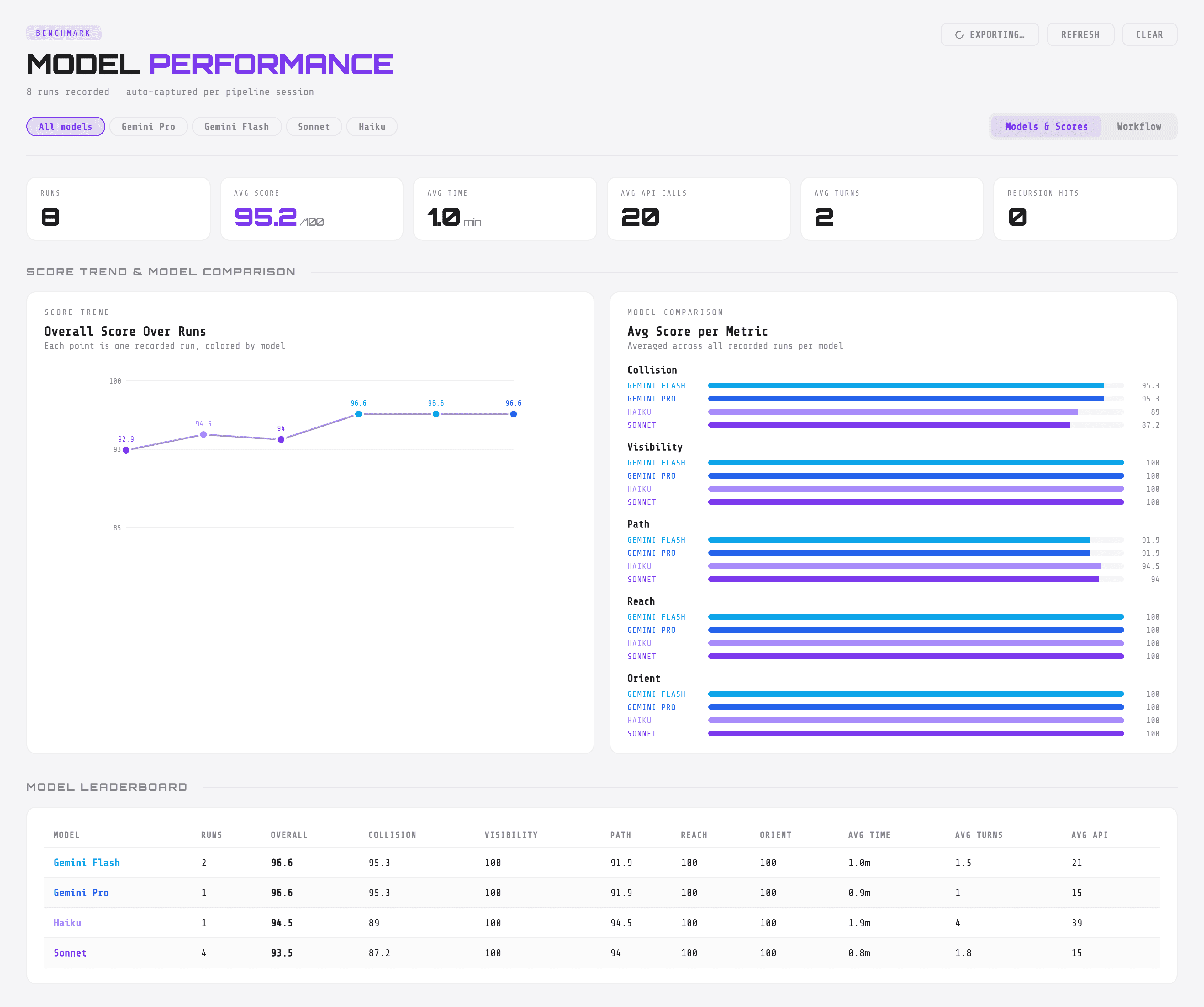
Tested across 20 sessions with two LLM providers, the system achieved a 95% cumulative success rate, a 6.4-minute average run time, and 51 tool calls per full workflow. Anthropic Claude consistently outperformed Google Gemini in multi-step tasks, sequential reasoning, and collision avoidance, demonstrating that spatial grounding matters as much as model capability.
Conclusions
Spatial Flow shifts the role of AI in architecture from post-hoc validator to active design participant. When a language model is given structured spatial knowledge, measurable constraints, and persistent memory, it can generate, evaluate, and iterate industrial layouts from a single natural language prompt, producing outcomes that are not just plausible, but industry-feasible.
Project Documentation